DO YOU NEED A HEAT-SHIELDED DOWNPIPE?

Understand the real difference between shielded and unshielded downpipes, who benefits from additional heat protection and which option is right for your car.

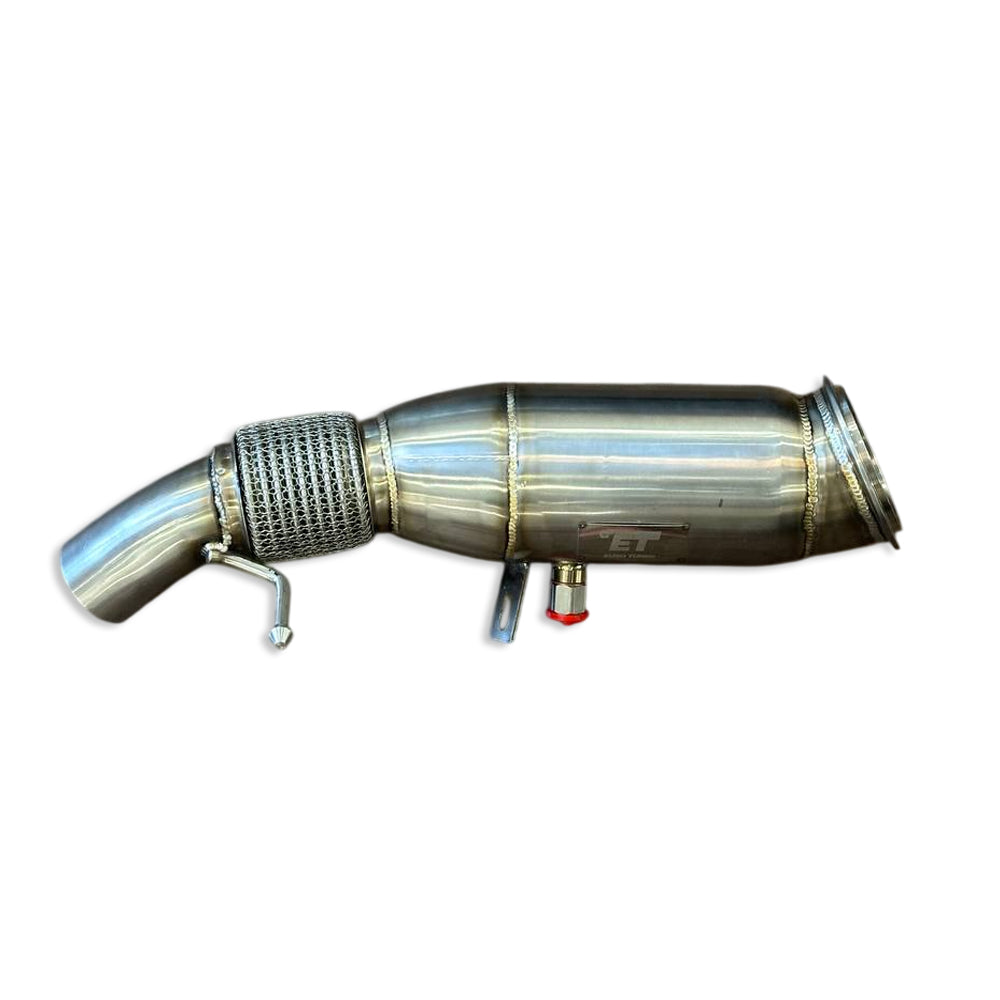
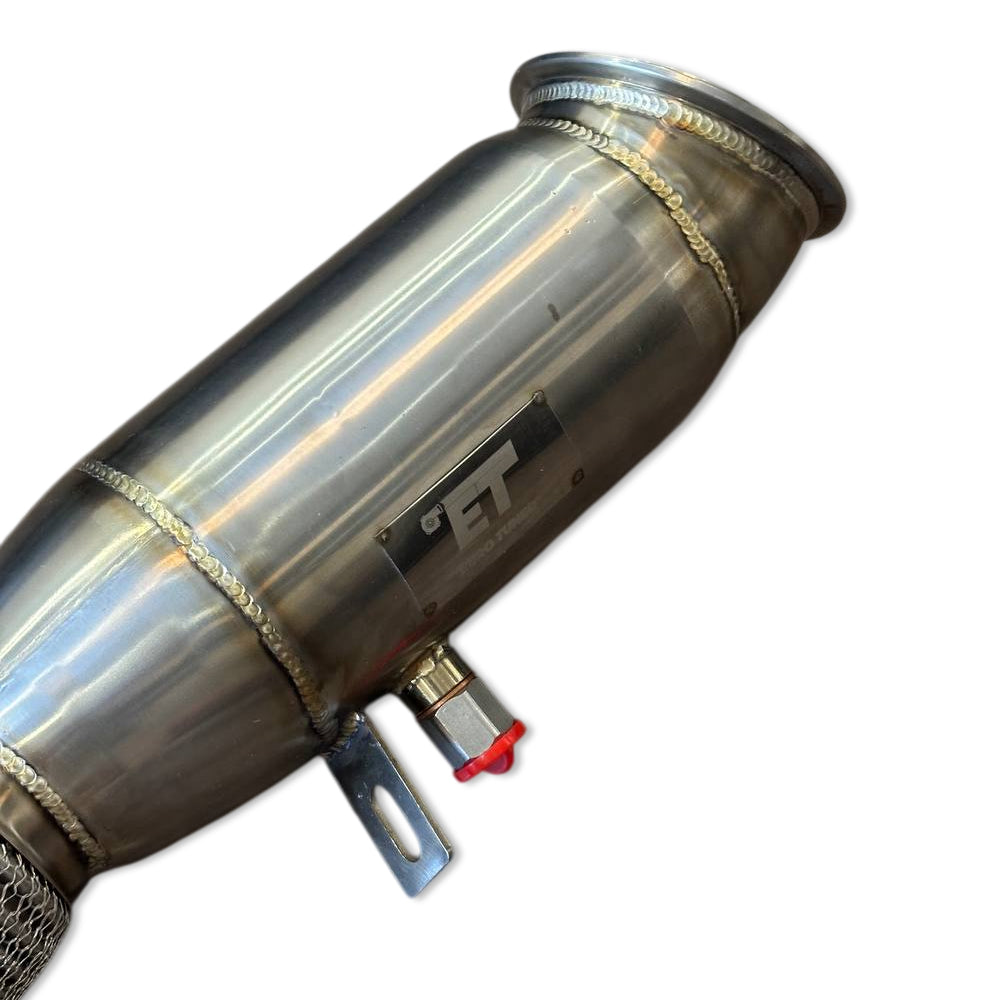
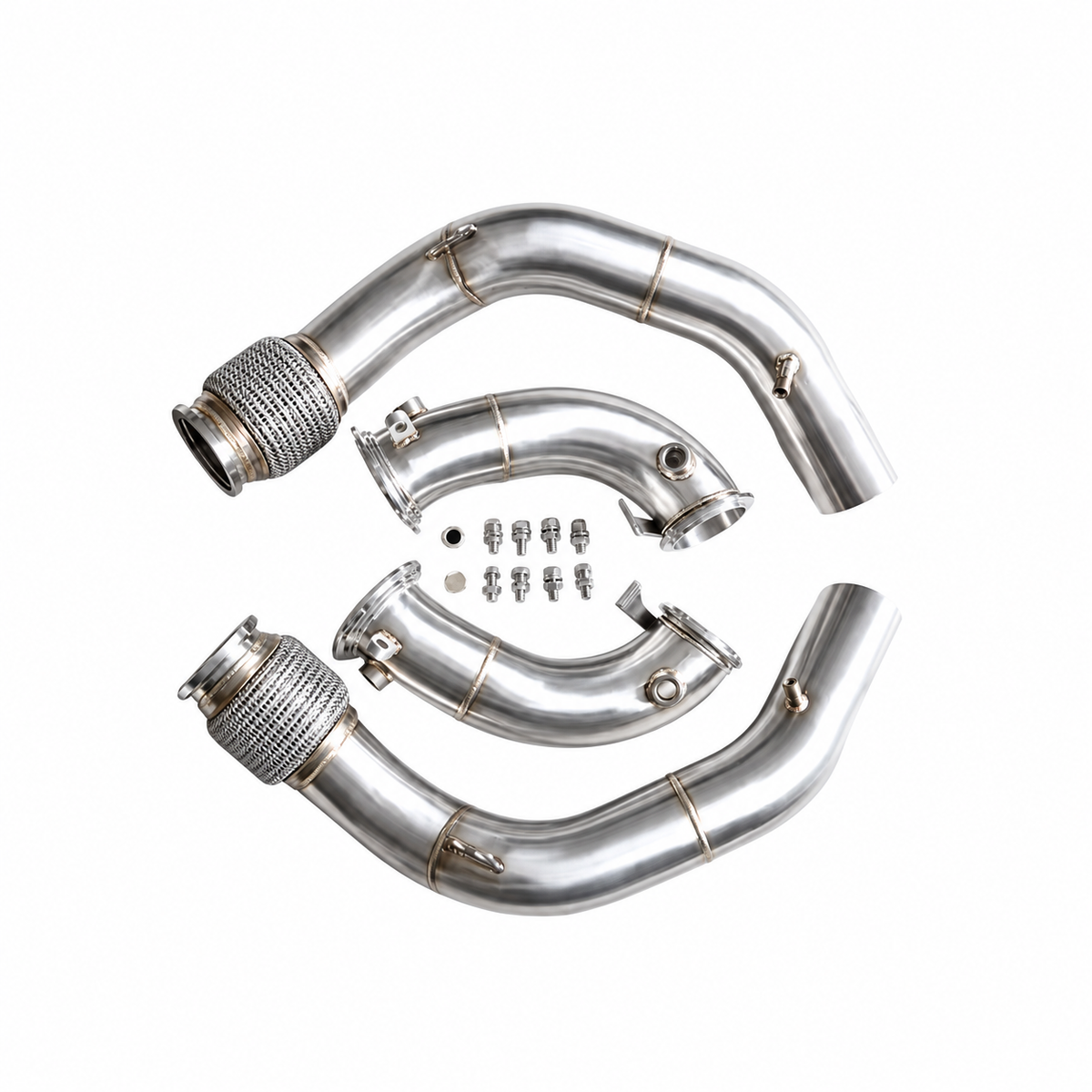
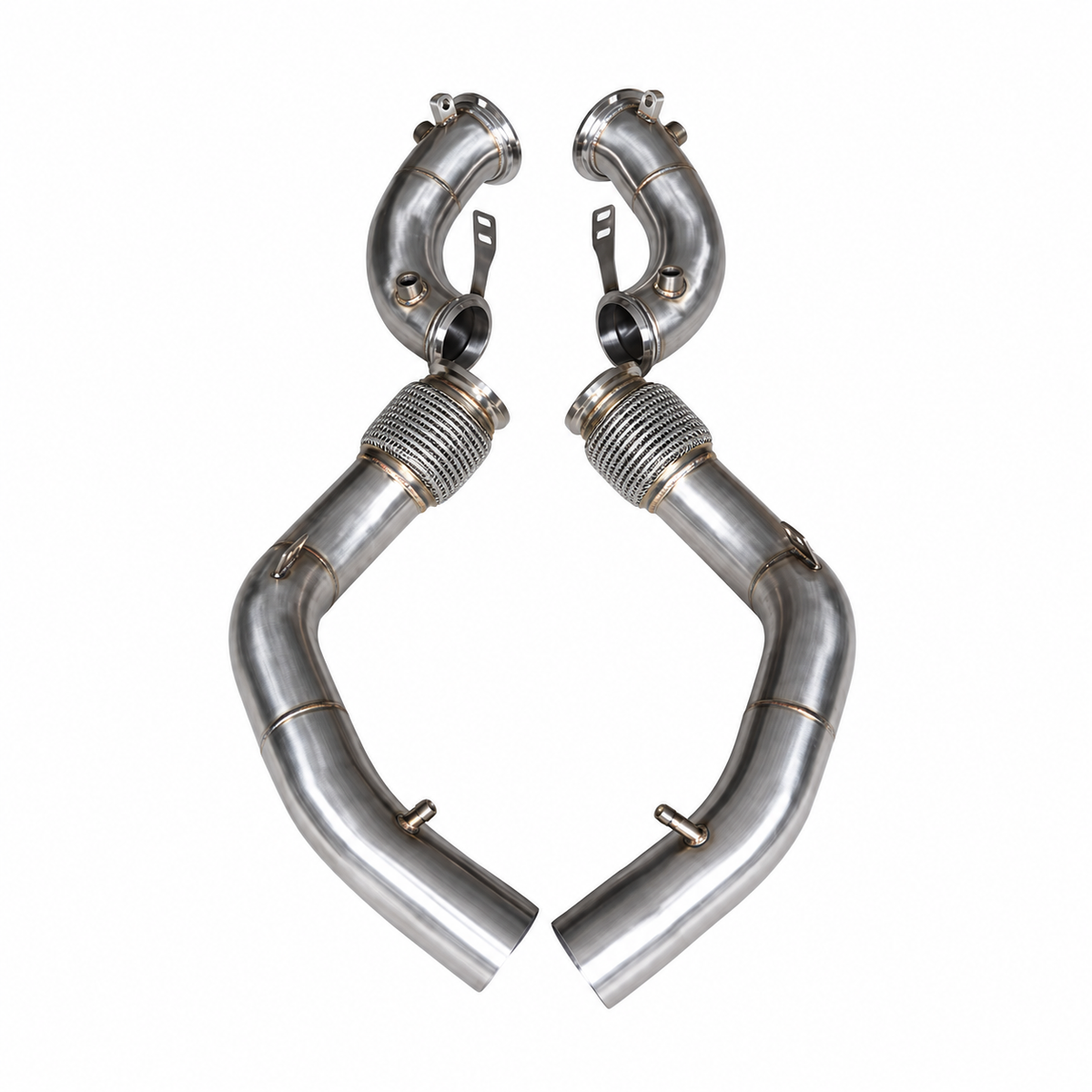
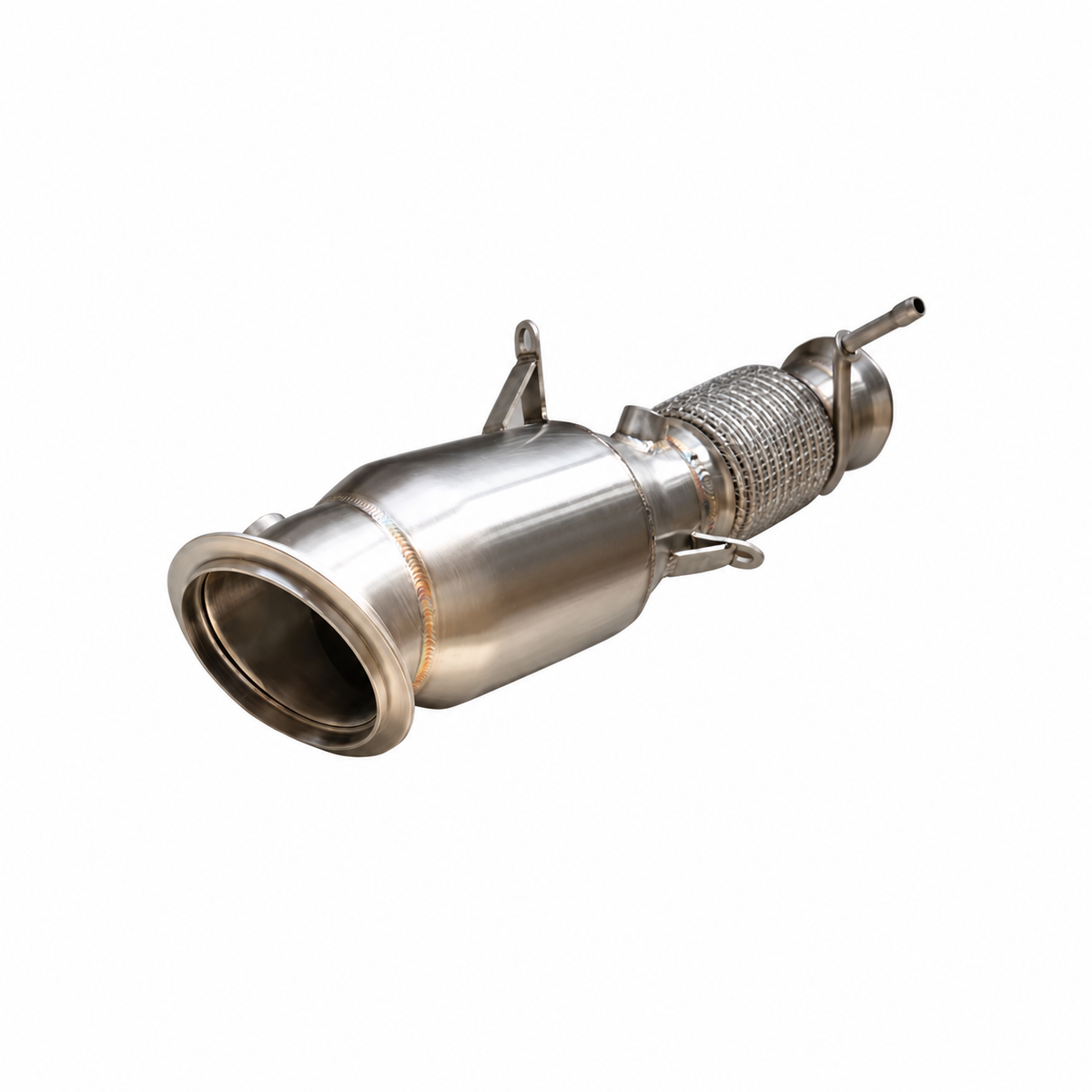
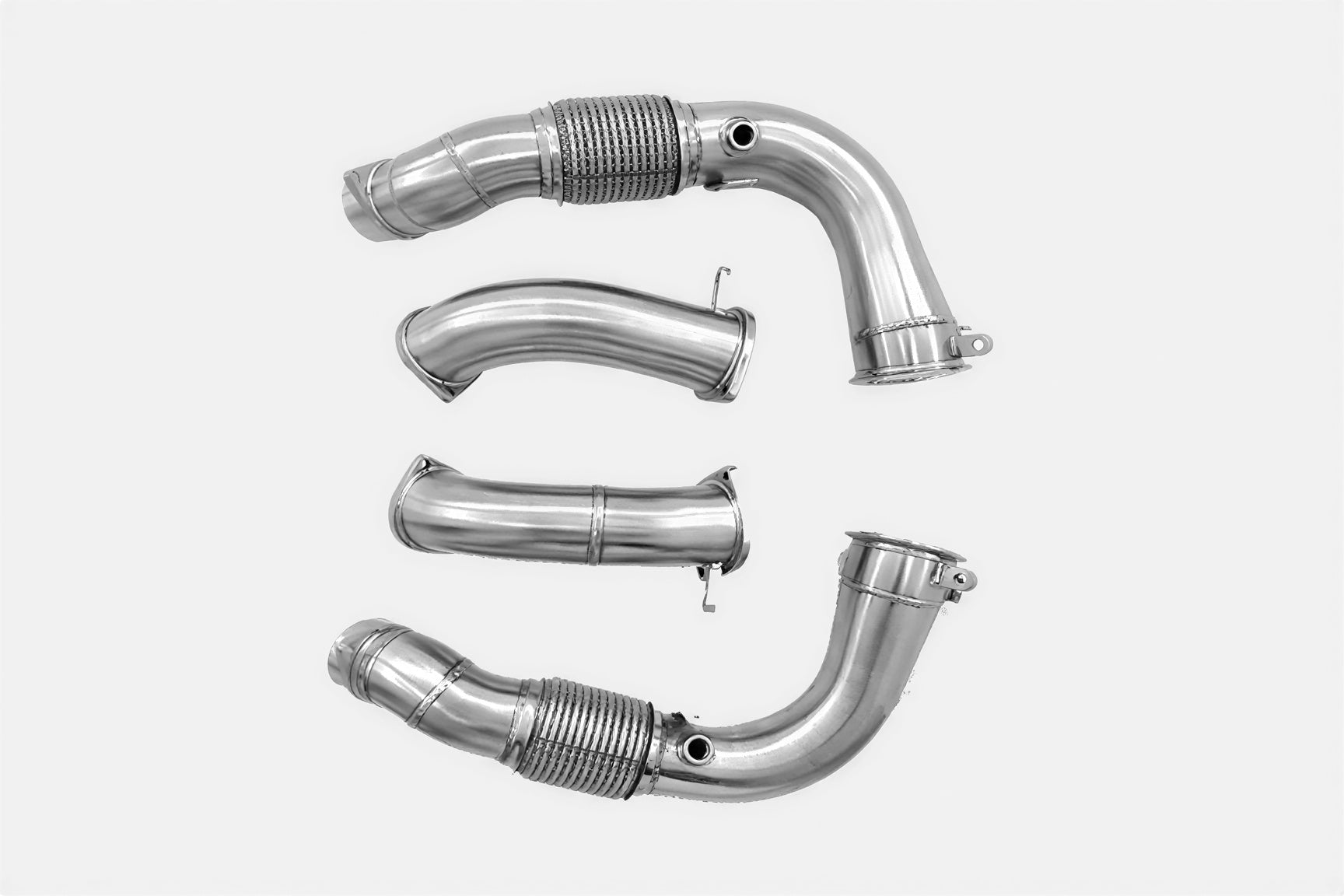
WHAT IS AN UNSHIELDED DOWNPIPE?

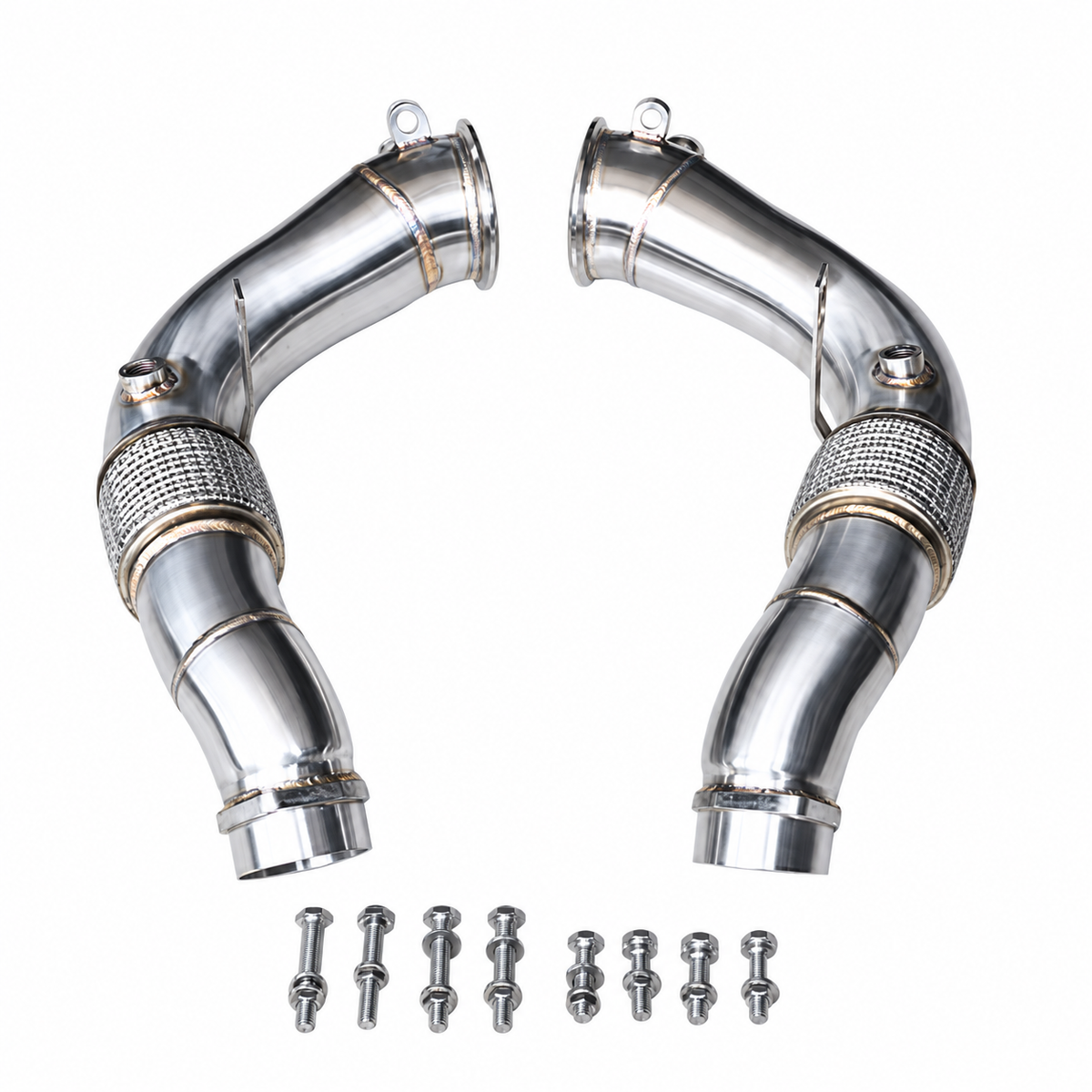
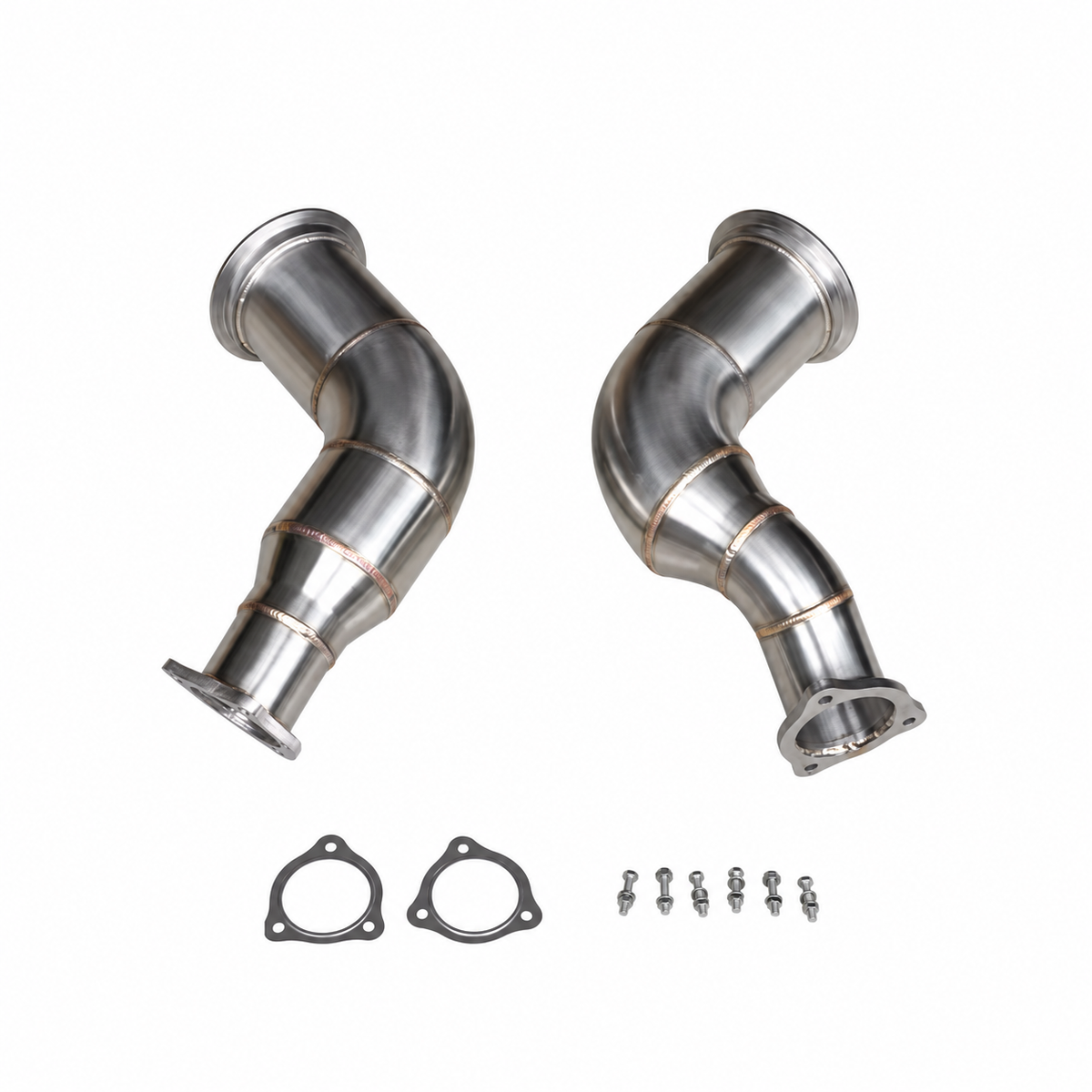
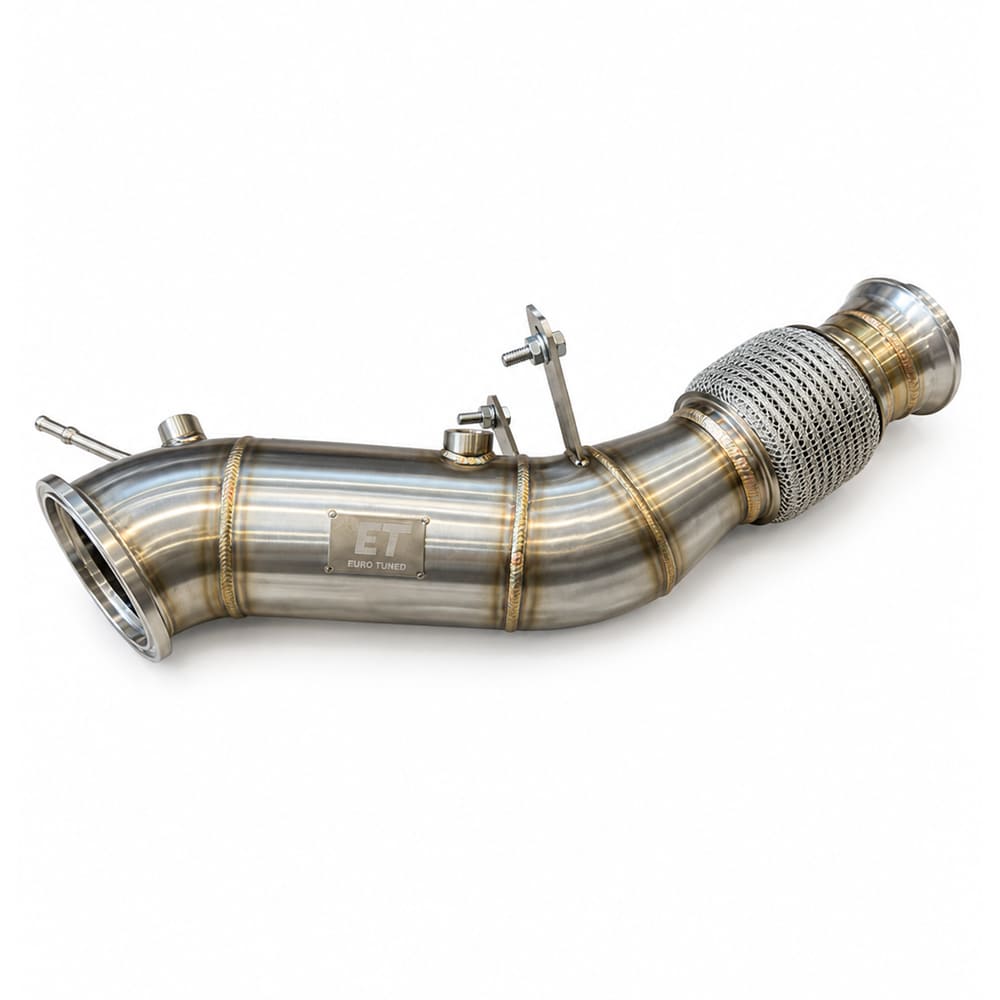
An unshielded downpipe is made from exposed 304 stainless steel without an additional external heat shield. When the pipe diameter, catalyst and internal design are the same, it can offer similar exhaust-flow and power potential to a heat-shielded downpipe.

This option is often suitable for vehicles that retain effective factory heat shielding, have sufficient clearance around the downpipe or are used mainly for normal road driving. Its simpler construction also makes it a more affordable choice for customers who do not require additional thermal protection.

Because the stainless steel surface remains exposed, more radiant heat can reach nearby engine-bay components. Correct installation, sufficient clearance and suitable factory heat protection are therefore important.

WHAT IS AN UNSHIELDED DOWNPIPE?

An unshielded downpipe is made from exposed 304 stainless steel without an additional external heat shield. When the pipe diameter, catalyst and internal design are the same, it can offer similar exhaust-flow and power potential to a heat-shielded downpipe.

This option is often suitable for vehicles that retain effective factory heat shielding, have sufficient clearance around the downpipe or are used mainly for normal road driving. Its simpler construction also makes it a more affordable choice for customers who do not require additional thermal protection.

Because the stainless steel surface remains exposed, more radiant heat can reach nearby engine-bay components. Correct installation, sufficient clearance and suitable factory heat protection are therefore important.

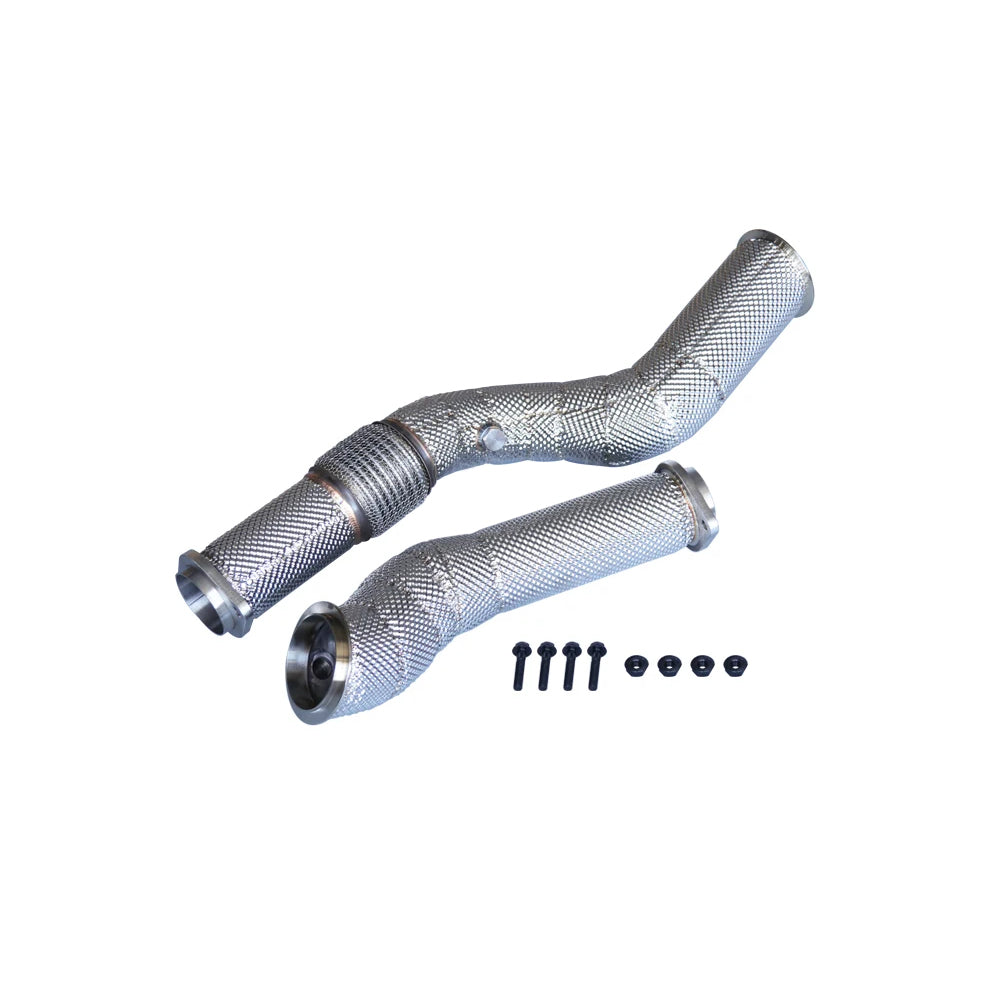
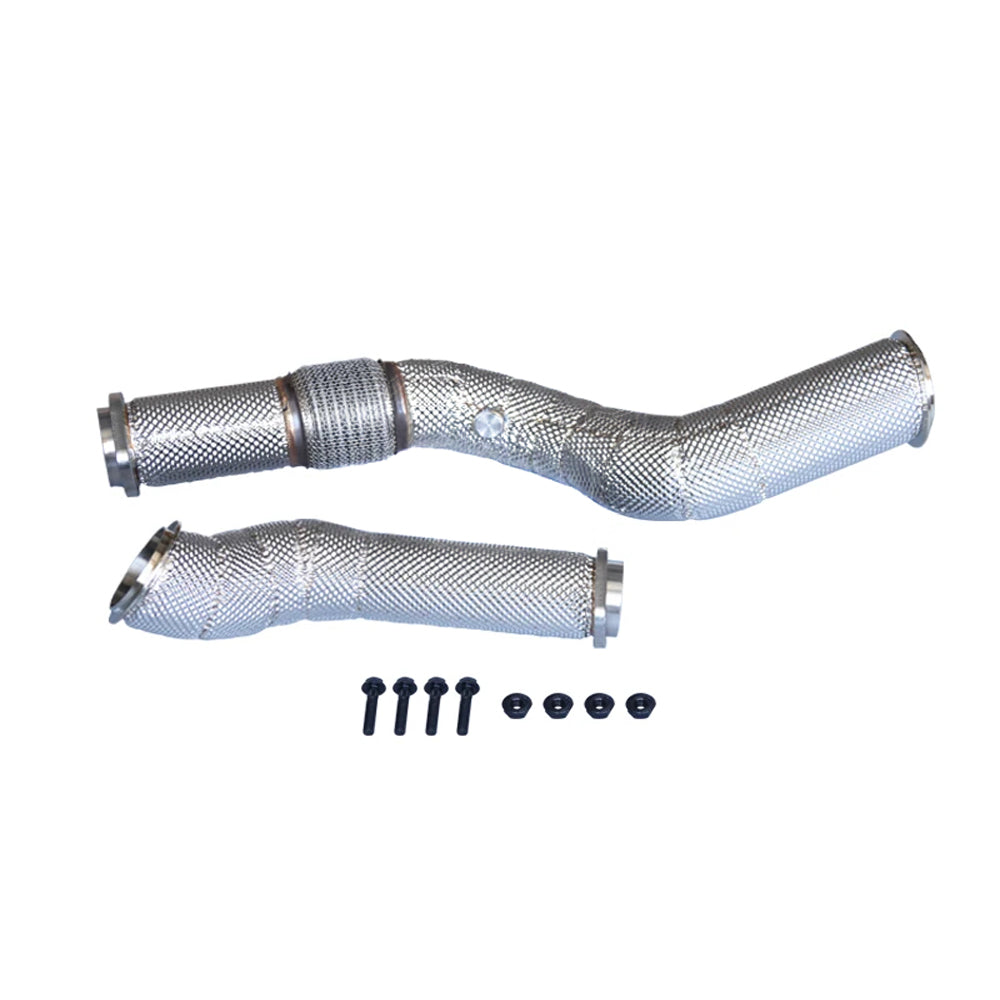
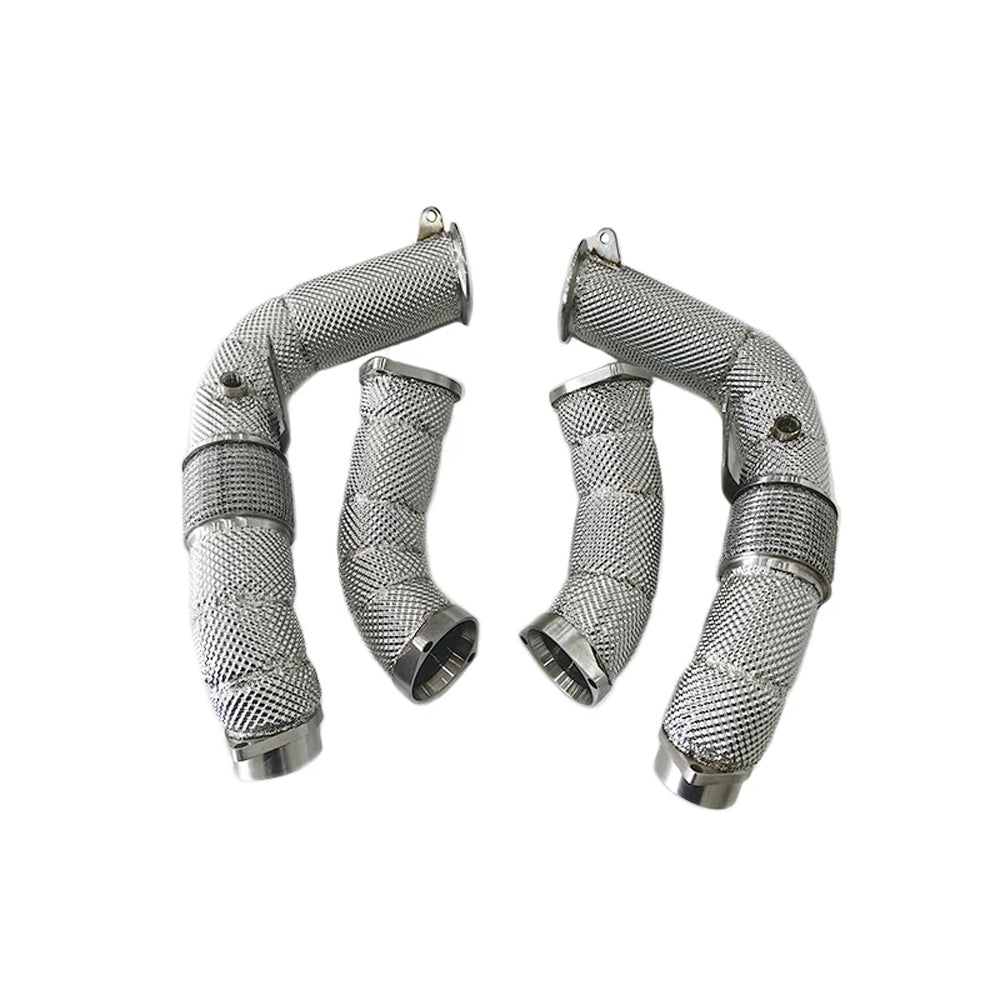
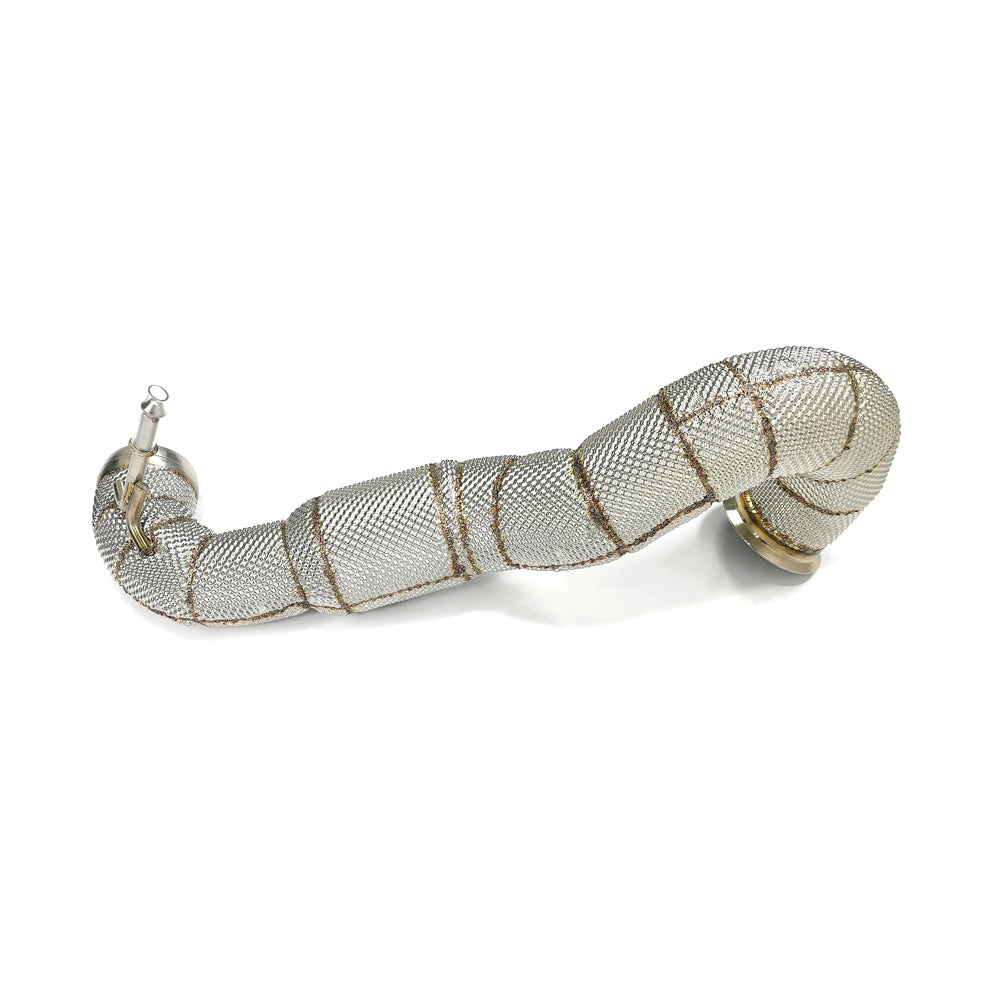
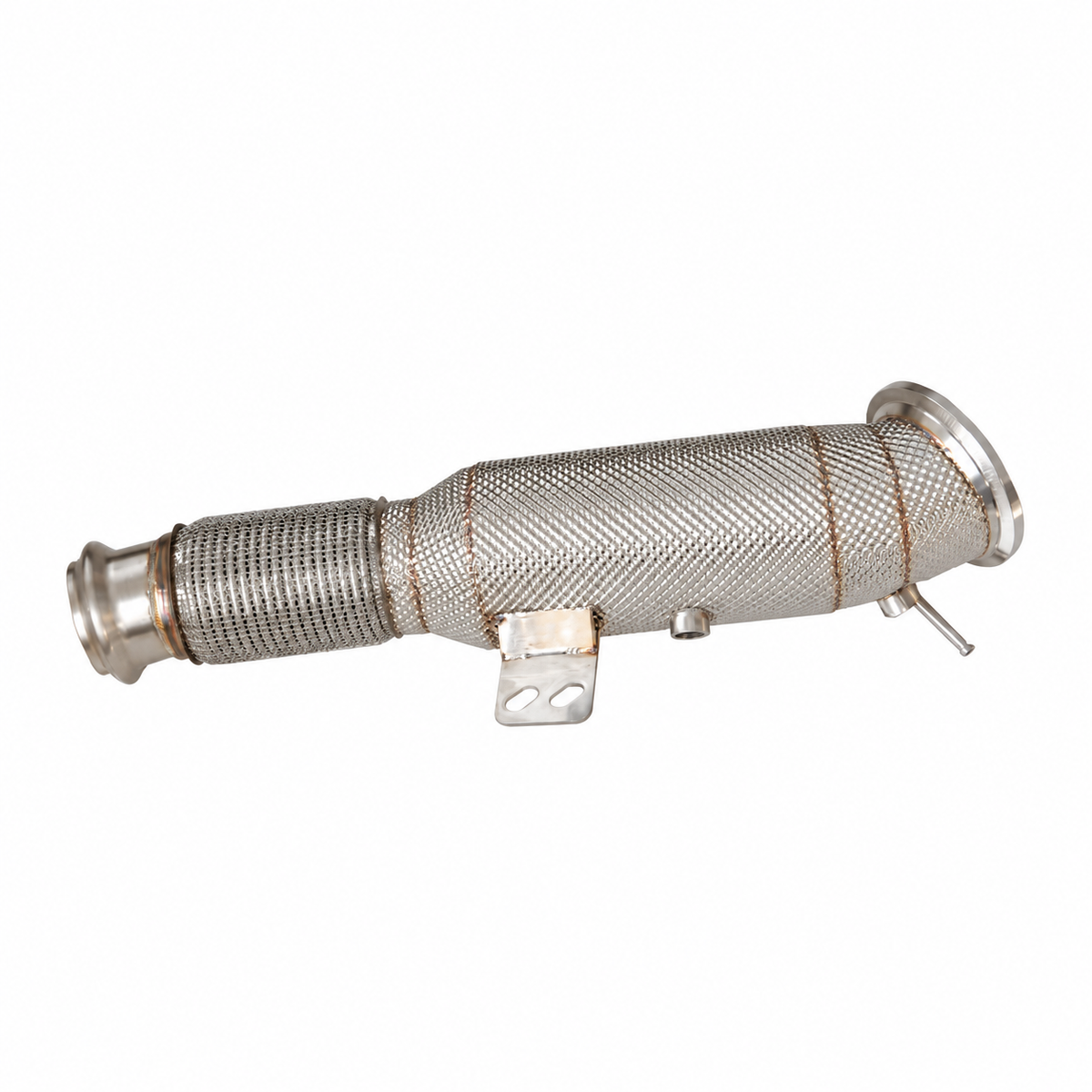
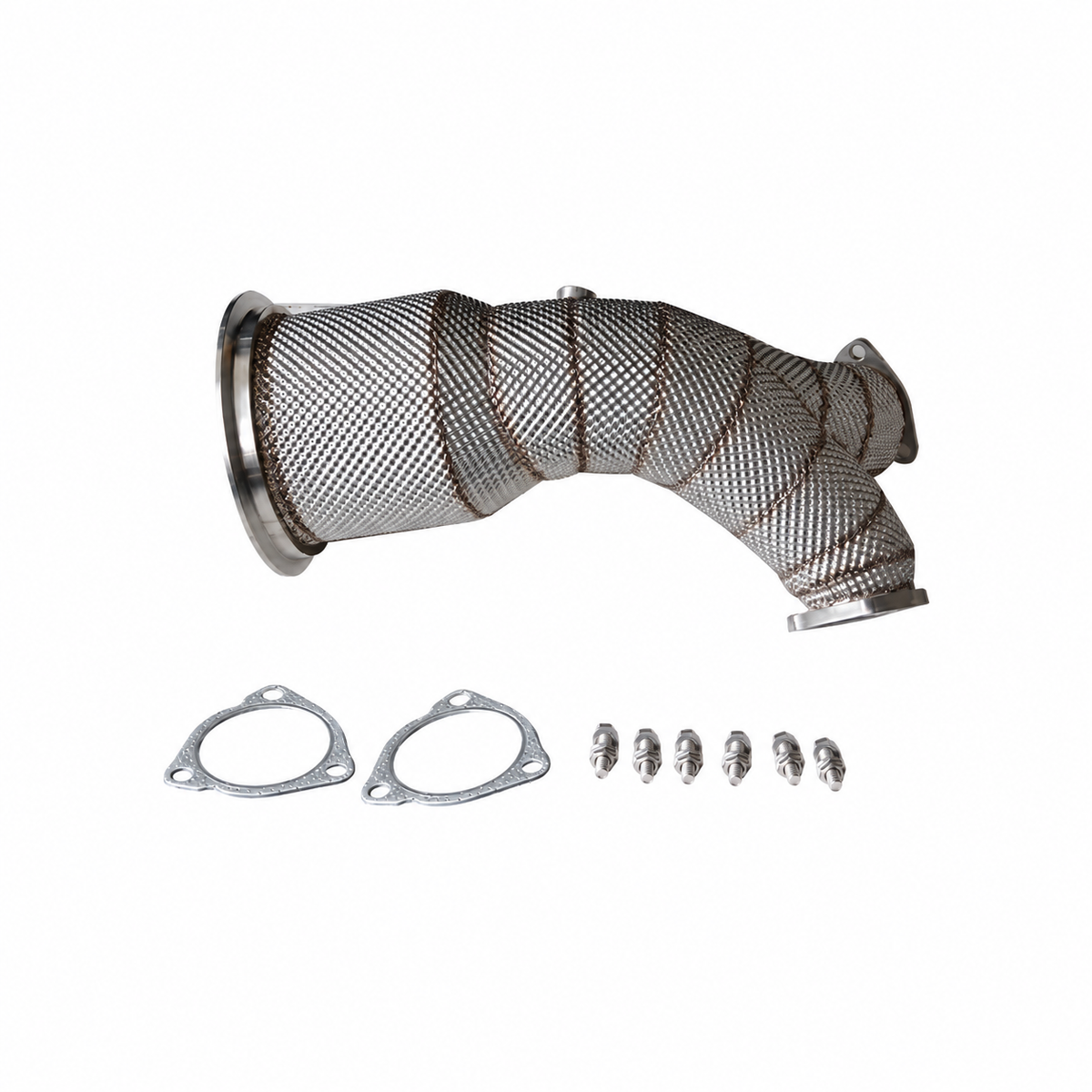
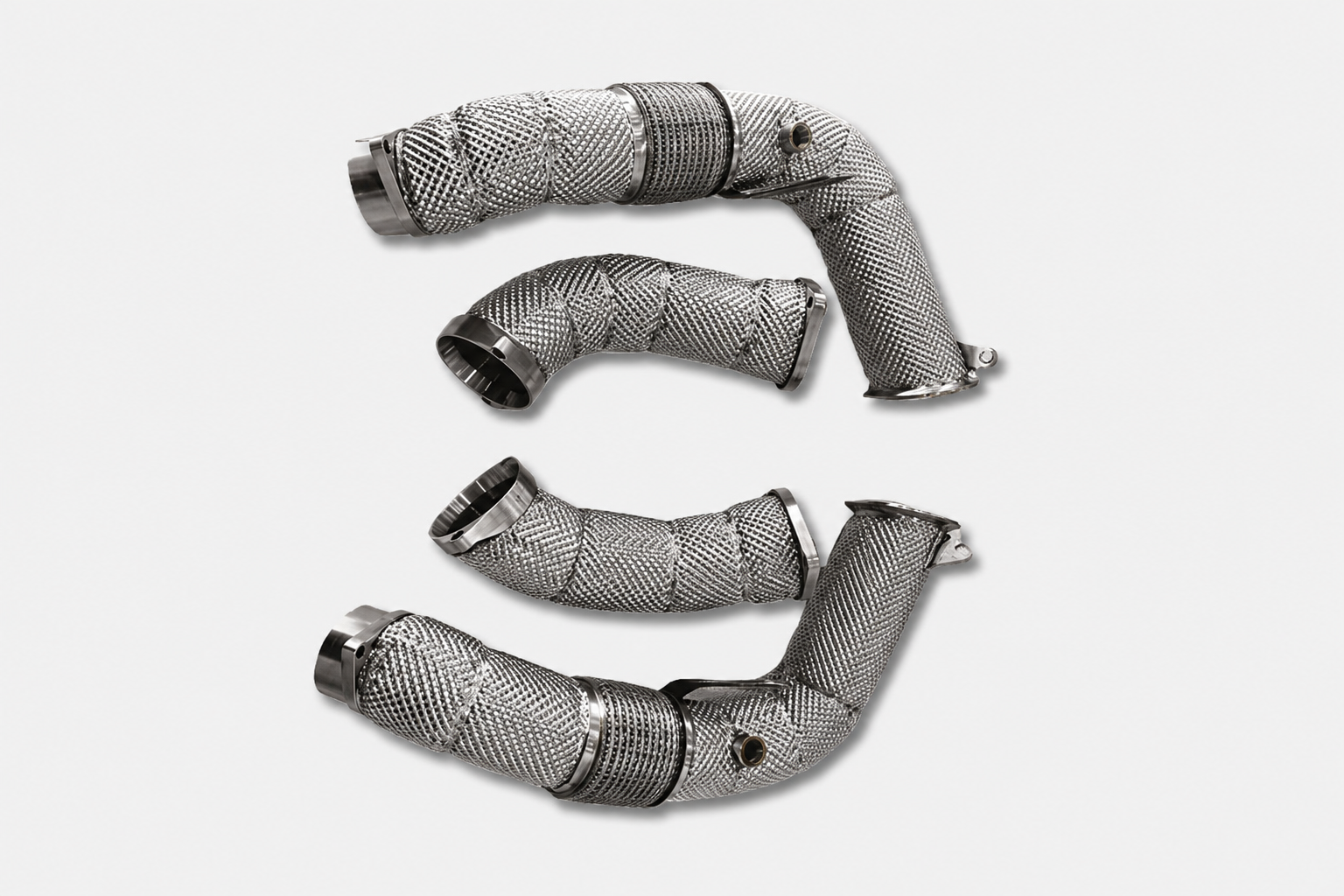
WHAT IS A HEAT-SHIELDED DOWNPIPE?

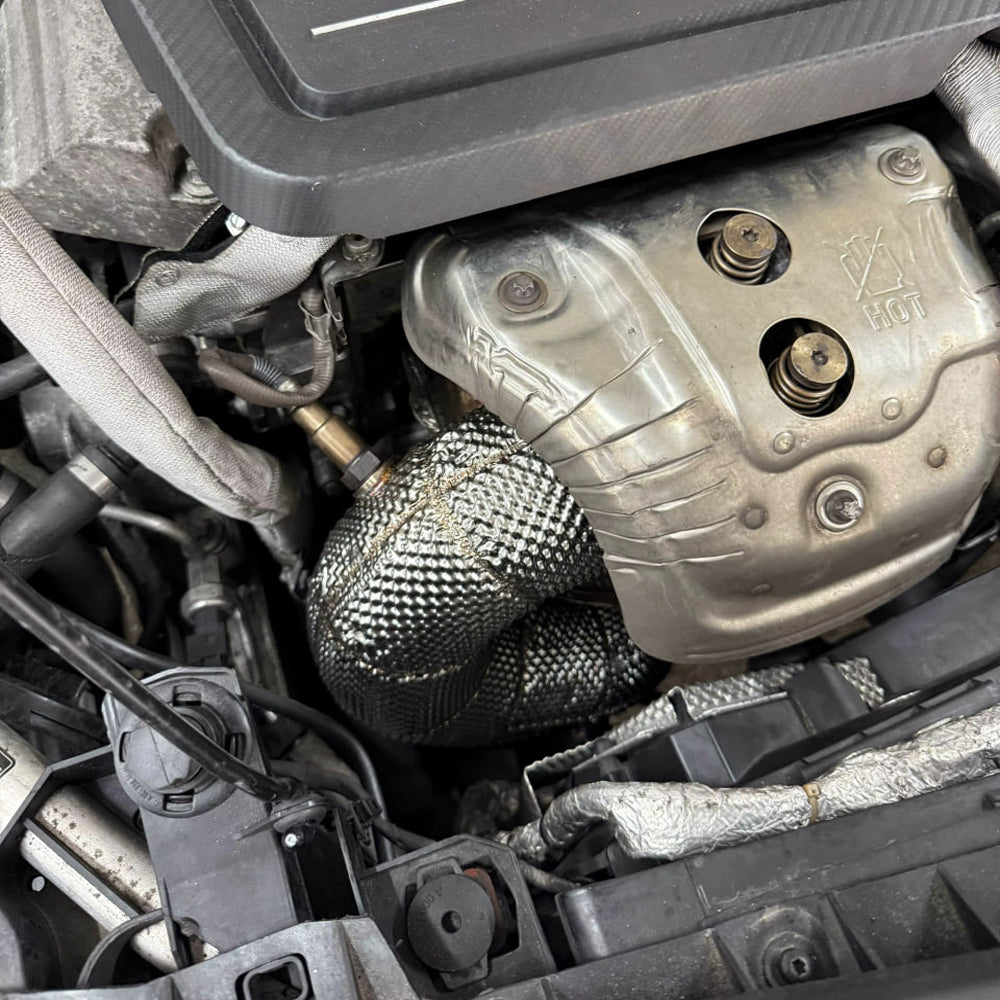
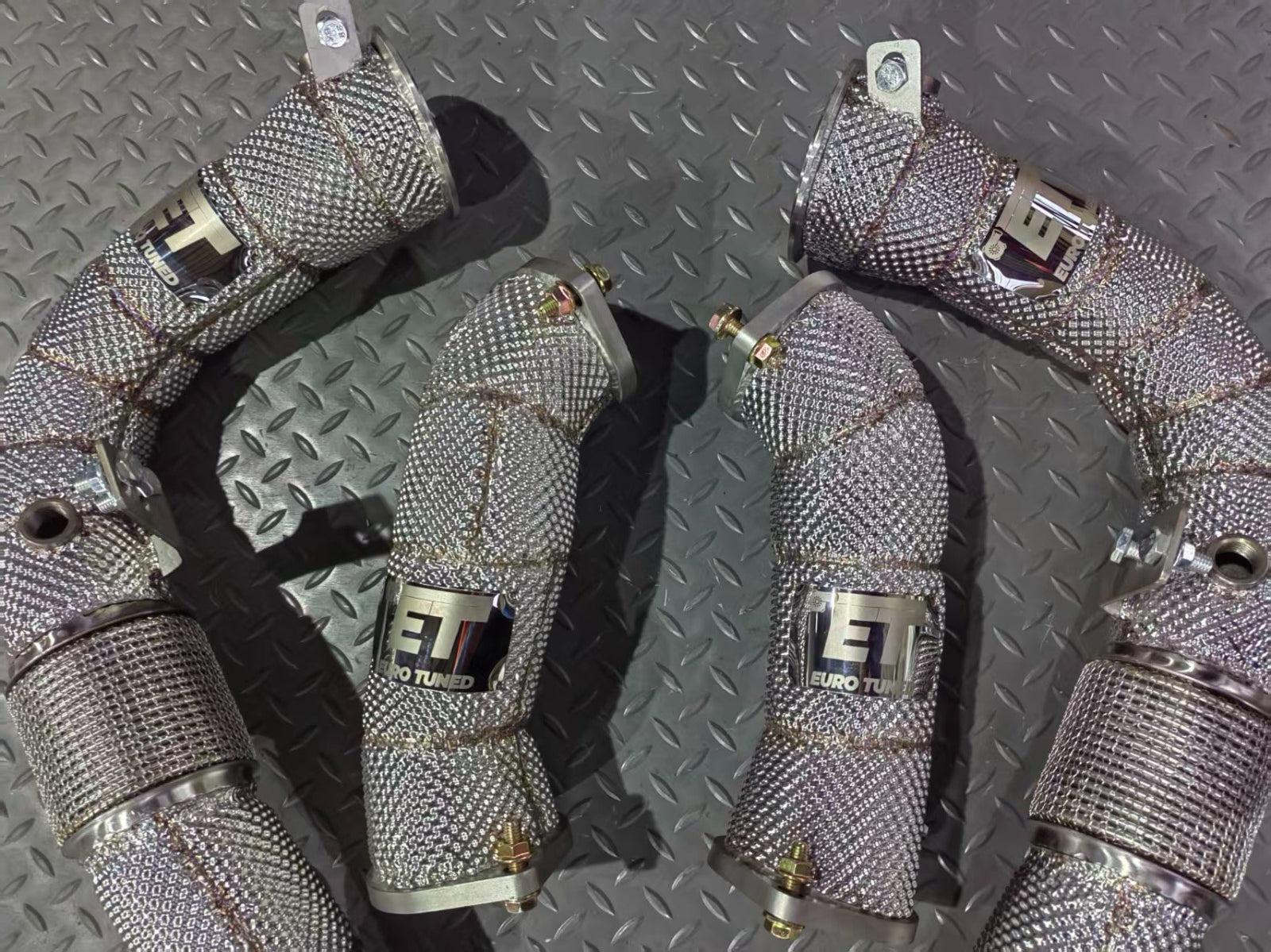
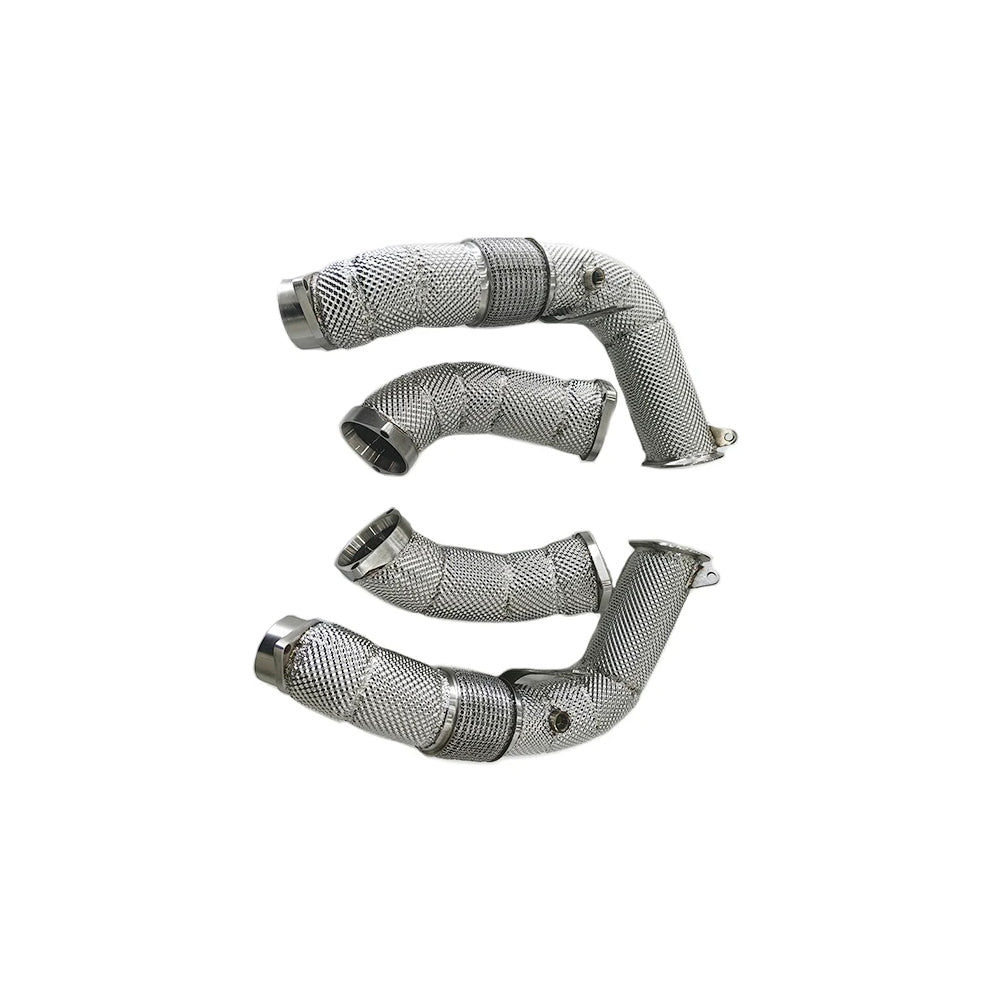
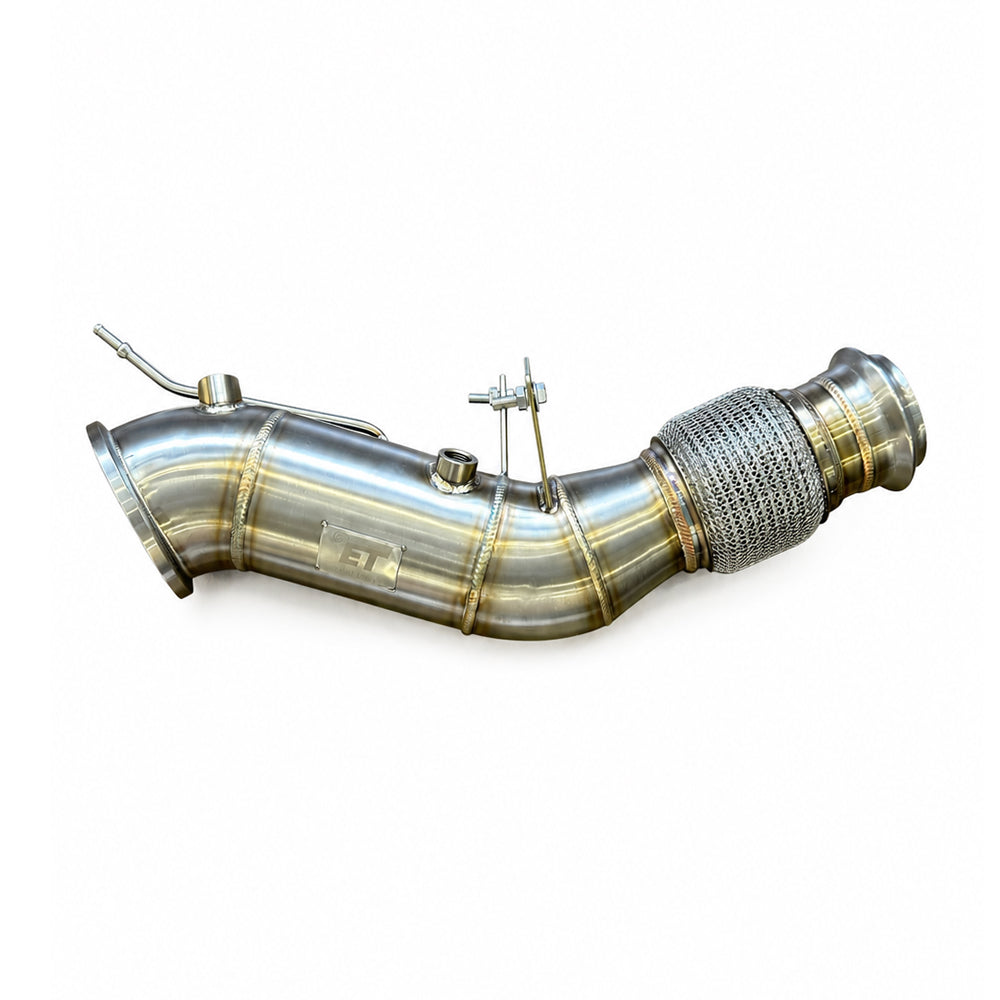
A heat-shielded downpipe uses an external thermal barrier around the 304 stainless steel pipe. Its main purpose is to reduce radiant heat reaching nearby wiring, hoses, intake components and other heat-sensitive parts inside the engine bay.

The heat shield does not automatically increase horsepower. When the pipe diameter, catalyst and internal construction are the same, a heat-shielded and unshielded downpipe can offer similar exhaust-flow and power potential. The key advantage is improved thermal management.

This option is particularly useful for tuned vehicles, compact engine bays, upgraded turbocharger setups and cars that are regularly driven under high load. It is also a sensible choice when the original factory heat shield cannot be reused.

BEST FOR TUNED CARS, TIGHT ENGINE BAYS AND DEMANDING DRIVING CONDITIONS.

WHAT IS A HEAT-SHIELDED DOWNPIPE?

A heat-shielded downpipe uses an external thermal barrier around the 304 stainless steel pipe. Its main purpose is to reduce radiant heat reaching nearby wiring, hoses, intake components and other heat-sensitive parts inside the engine bay.

The heat shield does not automatically increase horsepower. When the pipe diameter, catalyst and internal construction are the same, a heat-shielded and unshielded downpipe can offer similar exhaust-flow and power potential. The key advantage is improved thermal management.

This option is particularly useful for tuned vehicles, compact engine bays, upgraded turbocharger setups and cars that are regularly driven under high load. It is also a sensible choice when the original factory heat shield cannot be reused.

BEST FOR TUNED CARS, TIGHT ENGINE BAYS AND DEMANDING DRIVING CONDITIONS.

SIDE-BY-SIDE COMPARISON

Drag the slider to compare an exposed 304 stainless steel downpipe with the heat-shielded version. When the pipe diameter, catalyst and internal design are the same, both options can offer similar exhaust-flow and power potential. The key difference is how each design manages heat around the turbocharger and surrounding engine-bay components.

A heat-shielded downpipe adds an external thermal barrier that helps reduce radiant heat reaching nearby wiring, hoses, intake components, plastics and bodywork. This can be especially useful in tightly packaged engine bays, tuned vehicles, upgraded turbo setups and cars that are regularly driven under high load, in hot weather or on track.

An unshielded downpipe leaves the 304 stainless steel surface exposed. It uses a simpler construction, usually costs less and can still be an excellent choice when there is sufficient clearance around the pipe and the vehicle retains effective factory heat protection.

The heat shield should not be treated as a direct horsepower upgrade. Its main purpose is improved thermal management and protection of surrounding components. The best option depends on your vehicle, current modifications, available engine-bay space, driving conditions and budget. Both versions remain strong performance upgrades when installed correctly.

UNSHIELDED

HEAT-SHIELDED

Drag
DOWNPIPE BUYER’S GUIDE

WHAT YOU NEED TO KNOW BEFORE CHOOSING

Understand how a downpipe heat shield works, whether it affects performance and which downpipe construction is best suited to your vehicle.

01 THERMAL PROTECTION

WHY DOES DOWNPIPE HEAT MANAGEMENT MATTER?

The downpipe is installed directly after the turbocharger, where exhaust gases are still extremely hot. As these gases pass through the pipe, the 304 stainless steel downpipe absorbs heat and releases part of it into the surrounding engine bay.

On modern performance cars, the turbocharger, downpipe, wiring, coolant hoses, oil lines, intake components and bodywork are often positioned close together. A heat-shielded downpipe adds an external thermal barrier that helps reduce radiant heat reaching these nearby parts.

The main purpose of a downpipe heat shield is improved thermal management and additional protection for surrounding engine-bay components.

02 POWER & PERFORMANCE

DOES A HEAT-SHIELDED DOWNPIPE ADD POWER?

A heat-shielded downpipe is not a direct horsepower upgrade. When heat-shielded and unshielded downpipes have the same diameter, catalyst specification and internal design, both versions can offer similar exhaust-flow and power potential.

Downpipe diameter, catalyst type, ECU calibration, turbocharger setup and the remaining exhaust system have a much greater influence on horsepower. The main benefit of the shield is reduced heat transfer around the turbocharger and surrounding engine-bay components.

KEY POINT: Heat shielding improves thermal protection, not basic exhaust flow.
03 MAXIMUM HEAT PROTECTION

WHEN SHOULD YOU CHOOSE A HEAT-SHIELDED DOWNPIPE?

A heat-shielded performance downpipe is generally the better choice for tuned vehicles, upgraded turbocharger setups and tightly packaged engine bays. It is especially useful when the downpipe sits close to wiring, hoses, intake components or other heat-sensitive parts.

It is also valuable for high-load road cars, track-driven vehicles and cars used in hot climates. A heat-shielded downpipe may also be the preferred option when the original factory heat shield cannot be reused.

BEST FOR: Tuned cars, compact engine bays, upgraded turbos and demanding driving conditions.
04 SIMPLER CONSTRUCTION

WHEN IS AN UNSHIELDED DOWNPIPE THE RIGHT CHOICE?

An unshielded 304 stainless steel downpipe can still be a high-quality and effective performance upgrade. It uses a simpler construction and is usually more affordable because it does not include an additional external thermal barrier.

This option may be suitable when there is sufficient clearance around the downpipe, the vehicle retains effective factory heat shielding and the car is mainly used for normal road driving.

BEST FOR: Road cars with sufficient clearance and effective factory heat protection.
05 EURO TUNED RECOMMENDATION

WHICH DOWNPIPE SHOULD YOU CHOOSE?

Choose a heat-shielded downpipe when reduced radiant heat, additional component protection and stronger engine-bay thermal management are your main priorities.

Choose an unshielded downpipe when your vehicle has sufficient clearance, retains effective factory heat protection and you prefer a simpler, more affordable construction.
THE BOTTOM LINE
The best downpipe is not simply the most expensive option. It is the one that matches your vehicle, modifications and intended use.
DOWNPIPE COMPARISON

HEAT-SHIELDED VS UNSHIELDED DOWNPIPES

Compare the main differences between a heat-shielded downpipe and an unshielded downpipe before choosing the right construction for your vehicle.

COMPARISON
HEAT-SHIELDED Best thermal protection
UNSHIELDED Simpler, lower-cost option
Exhaust Flow
Similar flow potential when the internal design, diameter and catalyst specification are the same.
Power Potential
No automatic horsepower advantage from the external heat shield.
Can offer the same power potential when the internal specification is identical.
Radiant Heat Control
Improved control of radiant heat around the turbocharger and surrounding engine bay.
More heat is released directly from the exposed stainless steel surface.
Component Protection
Additional thermal protection for nearby wiring, hoses, intake components and bodywork.
Relies more heavily on sufficient clearance and effective factory heat protection.
Construction
304 stainless steel downpipe with an additional external thermal barrier.
Exposed 304 stainless steel construction without an external heat shield.
Installation Requirements
Useful when the factory heat shield cannot be reused or engine-bay space is limited.
Requires suitable clearance and appropriate protection from nearby heat-sensitive components.
Price
Typically more expensive due to the additional materials and manufacturing process.
Typically more affordable because of its simpler construction.
Best Suited For
Tuned cars, compact engine bays, upgraded turbos, hot climates and demanding driving conditions.
Road cars with sufficient clearance, effective factory shielding and less demanding use.
IMPORTANT TO KNOW

This comparison assumes both downpipes use the same pipe diameter, catalyst specification and internal construction. The heat shield is primarily a thermal-management feature rather than a direct performance upgrade.

DOWNPIPE FAQ

Quick answers to the most common questions about heat-shielded and unshielded downpipes.

Still unsure which downpipe is right for your car? Our team can help you choose between heat-shielded and unshielded options based on your vehicle, modifications and driving style.
CONTACT OUR TEAM